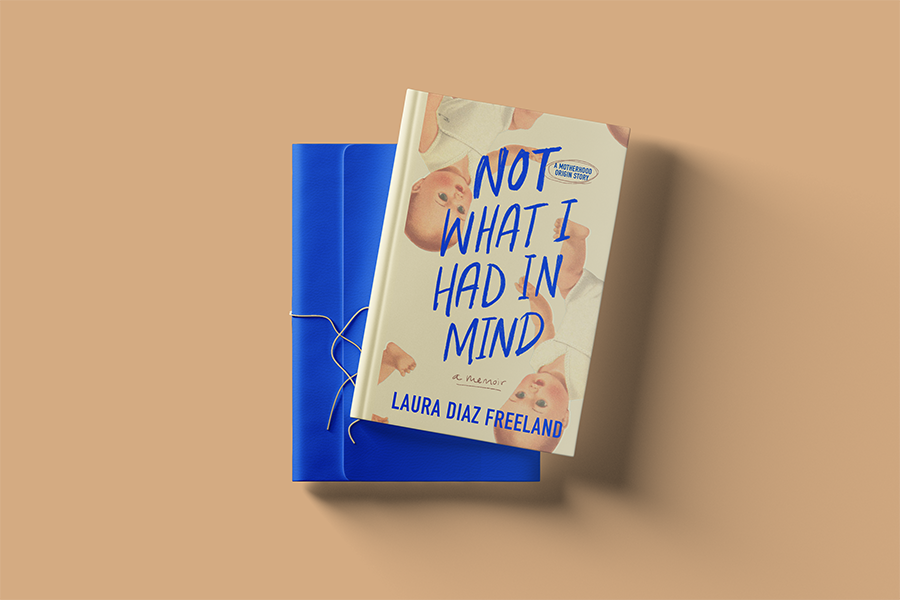
narrative nonfiction.
This book was written in the aftermath of total rupture—one that reordered my understanding of motherhood, faith, and control.
Not What I Had in Mind is a work of narrative nonfiction rooted in a high-risk twin pregnancy and prolonged NICU hospitalization. It moves through the clinical realities of extreme prematurity with precision and restraint, while interrogating the interior consequences of living inside a system where outcomes are uncertain and authority is diffuse. The book does not simplify the medicine, and it does not sentimentalize the experience. Instead, it asks what it means to think clearly, tell the truth, and remain morally awake when the stakes are high and the language is technical.
What emerged is not a recovery story, but an interpretive one. The book weaves reported medical detail, ethical reflection, and spiritual inquiry into a narrative that holds complexity rather than resolving it. It is concerned less with what happened than with how meaning is made when expertise, faith, and instinct collide—and when motherhood begins not with fantasy, but with consent forms and fluorescent light.
This is the work I am most proud of because it taught me how to translate without flattening: to render medical information accurately, to write fear without spectacle, and to make something literary out of what is often reduced to either data or sentiment. That discipline now undergirds all of my work.
The Problem With Potential
Peri is a word-forming element of Greek origin that means around or about. You see it a lot in medical terms like pericardium, which refers to the area around the heart, and perinatal, which refers to the time around birth. Viable means that something (or, in this case, someone) has the potential to work. When we put those words together, we get periviable, which means my daughter was born around or about the time her body has potential to work. The problem with potential is it’s usually unrealized.
The doctors and nurses who’ve spoken to me and my family don’t use the word periviable. They seem to want parents to understand what’s going on with their kids while still preserving hope. Medical terminology does not lend itself to optimism. Instead of calling my daughter periviable, they call her a tiny baby. Which sounds cute, but there is nothing cute about her pellucid skin and long, skinny fingers.
Any baby born weighing under 800 grams before 26 weeks gestation is a micro preemie. Micro comes from the Greek word mikros, meaning small. Small is an egregious understatement.